
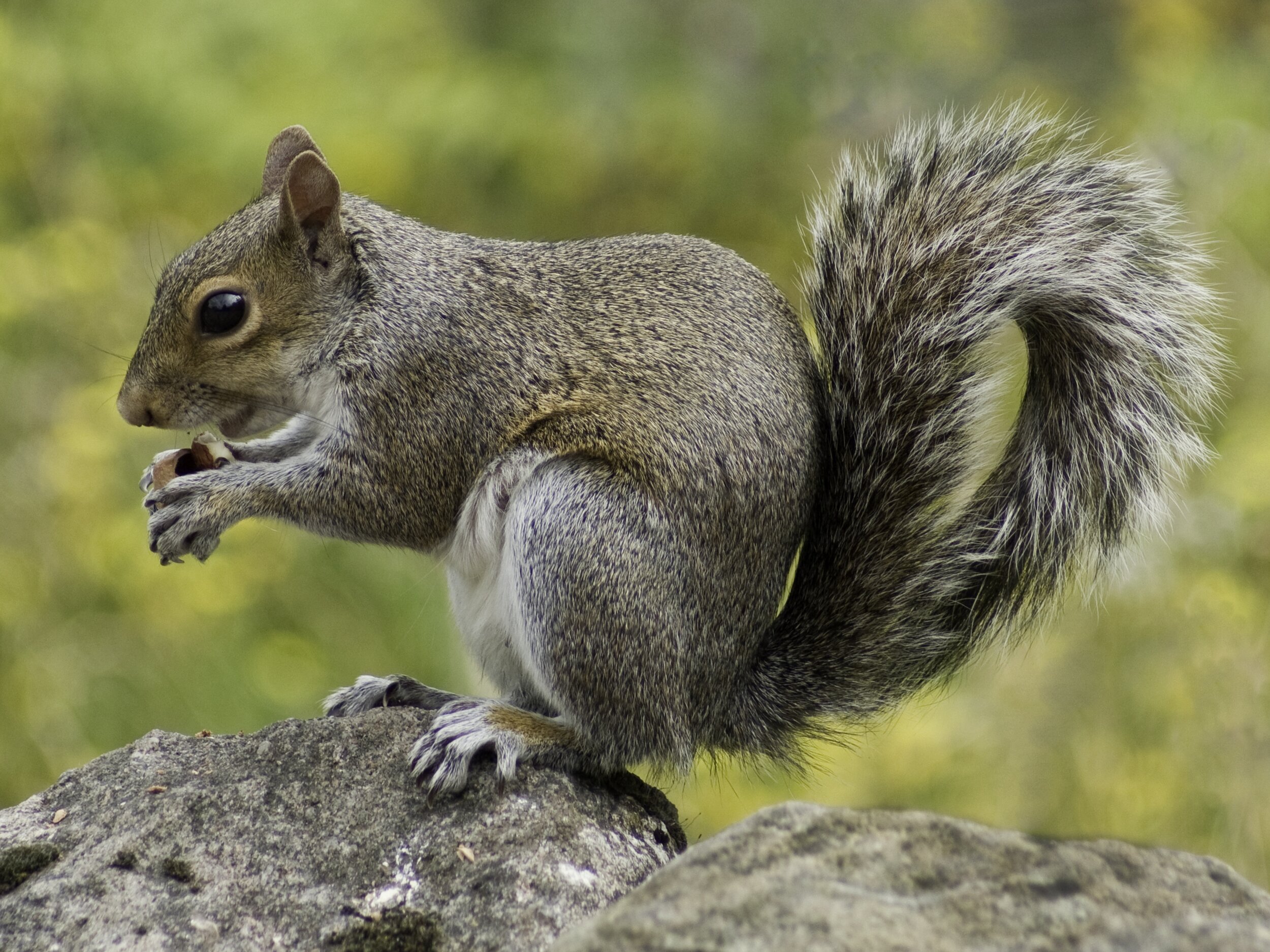
Eastern Grey Squirrel (Sciurus carolinensis)
Common Access Areas
- Gable and Soffit Venting
- Rooftop Venting (Box Vents, Ridge Vents)
- Siding and Soffit to Roof Transitions
- Gutter to Roof Transitions
Health Risks
- Zoonotic Pathogens: They can shed dangerous bacteria and fungi like Leptospira (found in urine-contaminated water/soil) and Trichophyton (causing ringworm)
- Tick-Borne Diseases: Grey squirrels frequently carry deer ticks (vectors for Lyme disease) and other pathogens that can be transferred to pets or humans.

Damage Risks
- Water leaks from damaged roof/siding
- Insulation contamination and compaction
- Siding, gutter, and roof damage
- Drywall damage to walls and ceilings from denning/nesting activity

Squirrel Control
Prevention is key to keeping gray squirrels, or any other animal, from taking up residence in your home or building. Keep trees and overhanging branches away from your structure. Make sure all parts of the exterior of your building are maintained, and repair any rotted or damaged areas of eaves and soffits. If squirrels do get into your home, a thorough inspection of how they are entering and exiting, followed by a structure trapping and exclusion protocol are necessary.