
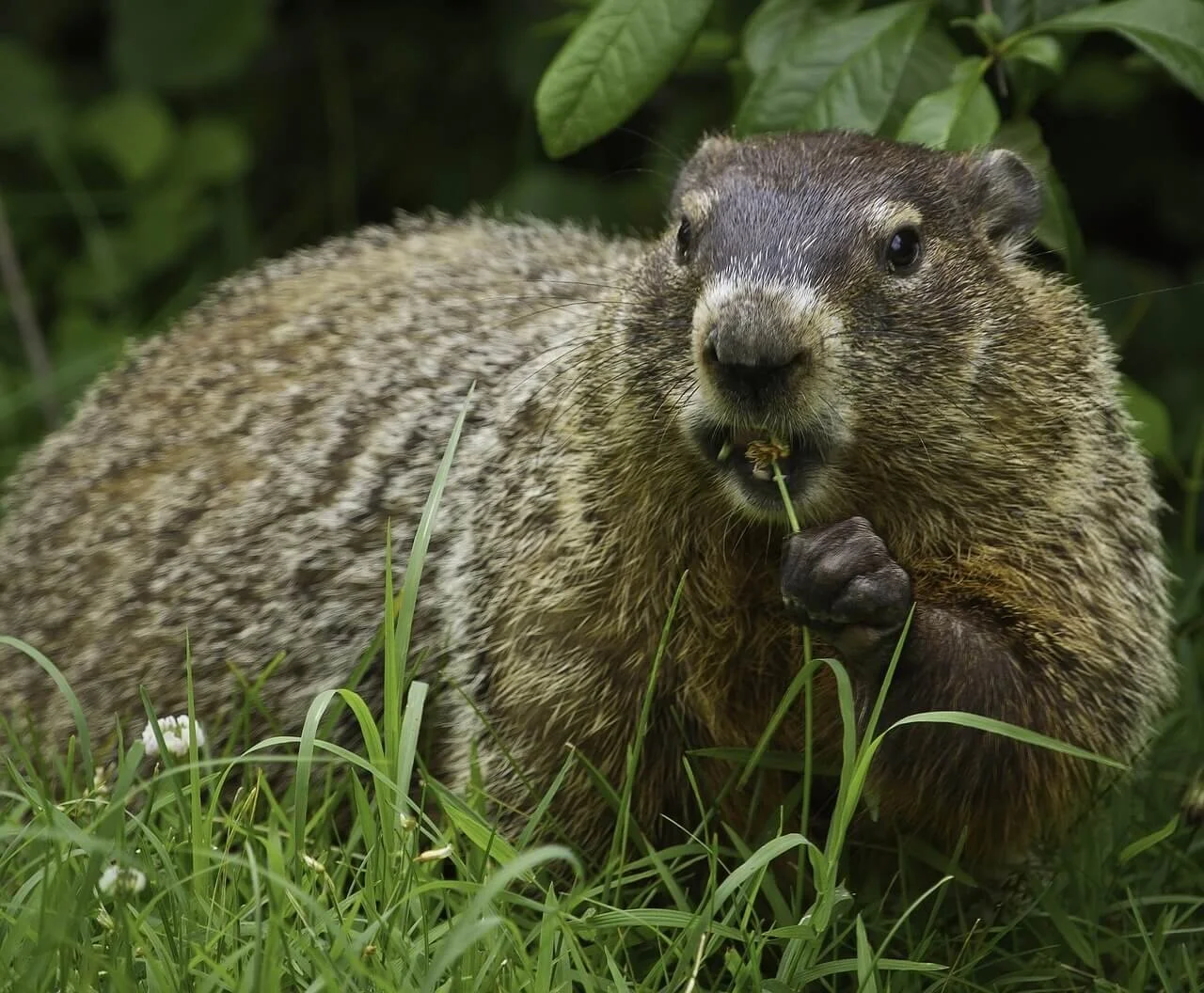
Groundhog (Marmota monax)
Common Access Areas
- Under decks, patios, and porches
- Hillsides and retaining walls
- Under sheds, barns, and outbuildings
- Under driveways and sidewalks
Health Risks
- Lyme Disease: The ticks found on groundhogs also transmit Lyme disease, making your yard a higher-risk area for tick bites
- Leptospirosis: This bacterial disease can be transmitted to humans and pets through contact with soil or water contaminated by infected groundhog urine.
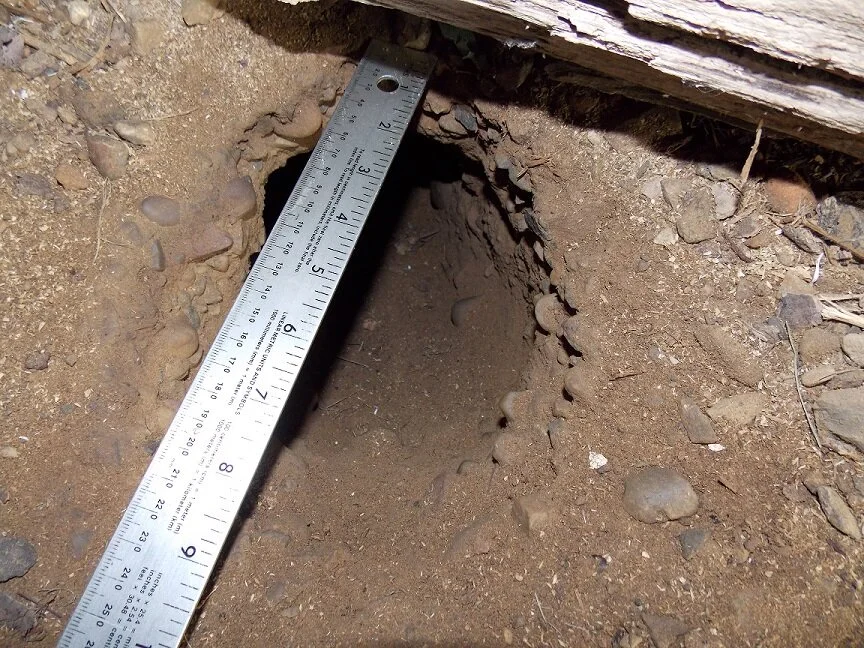
- Burrowing Hazards: Their extensive underground tunnel systems can create dangerous sinkholes or tripping hazards that risk broken bones for people and pets.
Damage Risks
- Weakening of foundations of smaller structures
- Damage to paver and block patios/sidewalks
- Collapse of retaining walls
- Trip and fall hazards from burrow entries

Groundhog Control
Late winter/early spring is the best time for trapping groundhogs. The groundhogs alive in early spring are the adults that will produce the next generation later in the spring. Catching one in March could mean eliminating five in June. Early trapping also has tactical advantages, because the landscape is barren.