
raccoon (Procyon lotor)

Common Access Areas
- Gable and Soffit Venting
- Rooftop Venting (Box Vents, Ridge Vents)
- Siding and Soffit to Roof Transitions
- Gutter to Roof Transitions
- Chimneys

Health Risks
- Raccoon Roundworm (Baylisascaris procyonis): Raccoons carry this intestinal parasite which sheds millions of eggs in their feces.
-Leptospirosis: A bacterial infection spread through raccoon urine. Humans and pets can become infected by touching contaminated water, soil, or food.
- Rabies:A severe, almost universally fatal viral infection affecting the central nervous system. Raccoons are a primary reservoir for the disease.

Damage Risks
- Contaminated and compacted insulation
- Roof and siding damage
- Ceiling and wall drywall damage in areas of latrine site
- Damaged venting and chimney caps to gain entry
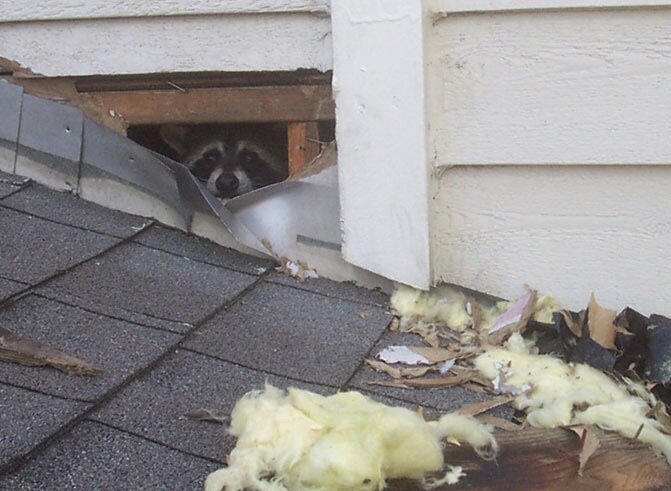
Raccoon Control
For the average homeowner unfamiliar with trapping raccoons, it is advisable to hire a professional wildlife control operator to remove the animal. The professional will have the proper equipment to accomplish the task and will be able to tell if a trapped female is nursing its young. This is very important because you don’t want to leave young behind to starve.