
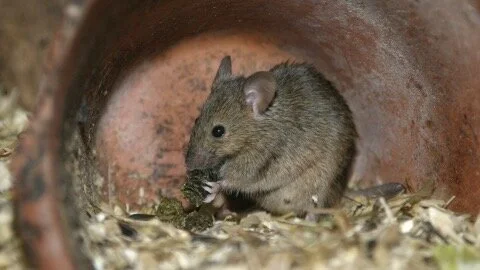
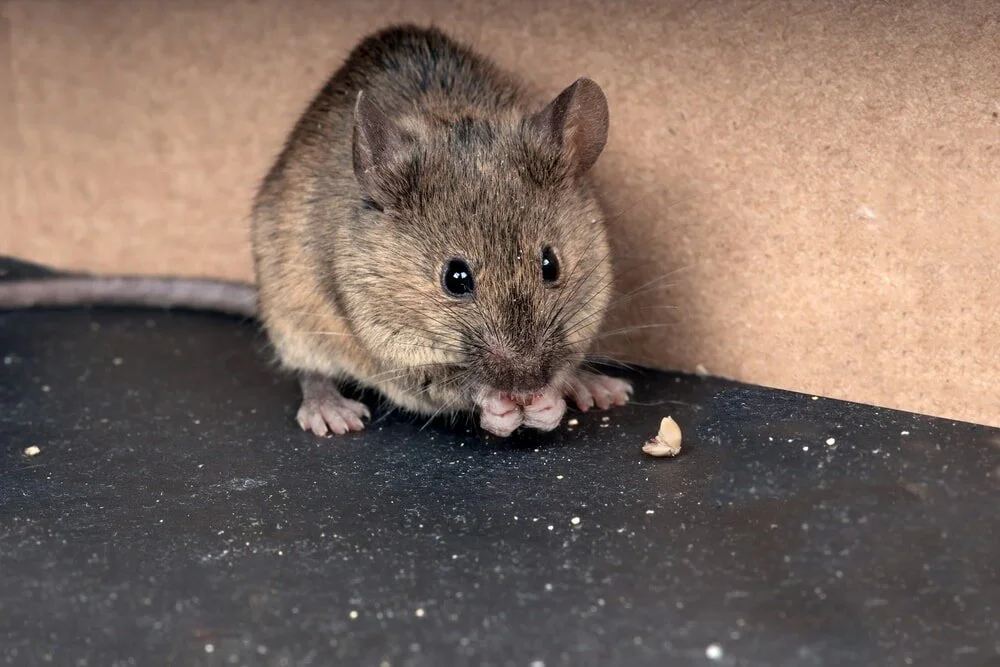
House Mouse (Mus musculus)
Common Access Areas
- Door Seals (Garage and Pedestrian)
- Utility Entrances (Gas Line, AC Supply, Cable)
- Venting (Crawlspace, Bathroom, Dryer)
- Transitions (Foundation, Siding, Roofline)
Health Risks
- Salmonellosis: Mice foraging through pantries and walking across kitchen surfaces can contaminate food and water with their feces
- Parasite Vectors: Mice frequently introduce fleas, ticks, mites, and lice into homes
- Asthma and Allergies: Airborne dander, urine, and dried fecal matter can trigger significant allergic reactions and asthma attacks in sensitive individuals. [1, 2, 3]

Damage Risks
- Mice cause millions of dollars’ worth of damage to homes and businesses each year.
- Mice love to chew on electrical wires. Twenty percent of all home fires with unknown origins are generally attributed to rodents like mice chewing through electrical wires.
- Damaged food and linens is the most common damage done by mice in a home

Mouse Control
First, Huntsman Wildlife Professionals will identify the access points where house mice are getting into your home. We’ll make small repairs to seal up access points ourselves and recommend how to repair the larger ones. Then, we’ll strategically set up trapping stations in house mouse territories where they’ll be as effective as possible. Our mouse trapping can be a one time fee for a little as $485 to start and as low as $135 a month for our Rodent Protection Plan.